
 I love Twitter. It's an amazing way to connect with random people all over the web and babble on endlessly about things you care about. Earlier today I was tweeting back and forth with Dave Allen of Pampelmoose about the nature of music distribution. This is really an extension of that conversation. ( You can follow me here or holler at Goldie over here.)
A Brief History Of Music Recording
A weighty topic to be certain, but one that can be wrapped up quite neatly. Prerecorded music started in the player piano parlors of the 19th century, passed through wax cylinders and landed squarely on the vinyl discs that remain relevant today. Until the late 40's the technology had not advanced enough to allow for longer collections of music and it was soon after this period that the modern concept of the "album" was born. Birth Of The Cool by Miles Davis and company is a great representation of artists just starting to feel around in the LP format and take up some shoulder room. By the time the 70's rolled around albums had become a standard musical format that sat side by side with singles as the means of selling music to the population. In my opinion, Pink Floyd's The Wall is a great example of the vinyl album, long playing and epic in it's scope. It showcases a band willing to work extensively to produce a single running narrative that would have been very difficult to listen to on a shorter playing format.
Compact cassette and 8 Track didn't really make any waves as far as length and format are concerned so for the purposes of this discussion they're not that relevant. What really made an impact was the CD. A 78 minute (later 80) digital format offered artists and producers a broad palette to paint a picture on and they went to town. Ænima clocks in at 76:40 and would not be the same if Tool didn't have that amount of room to play around in. By the 90's artists and producers had gained considerable experience in long running formats. By the early 2000's the cassingle was no more and CD single sales had dropped to an almost negligible level. The album reigned as king at last.
 MP3 has changed the game almost completely. The fact of the matter is we're still not certain what the long term impact of the technology shift towards digital distribution models will be. Only time will tell. Leaving to the side all of the weighty and convoluted arguments about ownership rights, DRM and the changing nature of profit from music sales I instead want to focus in on the nature of musical narrative and the influence of technology on that process. It is evident that the way we distribute music has dramatically changed the way we as artists approach the creation of the work. Knowing in advance what media you have to work with influences the writing process pretty heavily. It enforces a restriction to the length of the material. Many experienced artists will tell you that limits are wonderful things. They force your creativity into gear and will propel you past a lot of sticking points.
Musical Narrative: The Wall by Pink Floyd
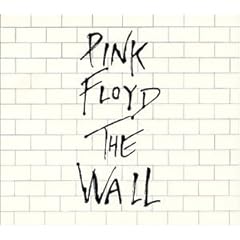 This album holds a very special place in my musical collection. I first heard this album as a teenager and it is the album that cemented my feelings towards Pink Floyd and rock music in general. There is a plethora of critical praise heaped on it, there are a diverse range of opinions regarding it's place in history and I'm certain that there's a thesis about it somewhere in academia. None of this was relevant to me, I had no idea that any of it existed the first time I heard it. It made a huge impression on me and a few months later I went up to Plan 9 in Richmond and picked up a CD copy for myself. I listened to this album obsessively and it broke open a huge range of music to me that I had never heard. I wasn't really into rock music at the time, mostly hip-hop, jazz and soul and this album led me right down a new path into a now epic obsession with rock music.
Nostalgia aside it was also the first album I ripped to MP3 in the late 90's. I had finally gotten a new computer that could handle MP3 conversion at something other than a glacial rate and the first album I reached for was The Wall. After about an hour of ripping and organizing later I sat down and popped my headphones on and listened for the first time to The Wall, uninterrupted and without pause. No flipping records, no changing CDs , just me and an hour and a half of uninterrupted bliss. I could only think that this was the first time I could listen to this album the way it was intended. One rock solid slice of rock opera pie taking up a good chunk of my evening. It was amazing. I still didn't understand just how important that moment was. It was just a record, and I was just listening to it. Only later have I come to realize the extent to which technology and narrative intertwine.
Musical Narrative: The Hazards Of Love by the Decemberists
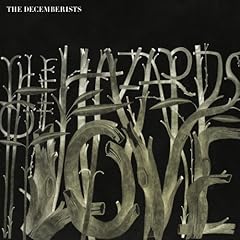 This is as fresh as it gets, I just bought this album today. It's quickly gaining my affections as an excellent record and more importantly it follows a single narrative thread throughout the album. It's a perfect example of a band who know the media they're writing to, it clocks in at 58:36 and plays perfectly well on CD and MP3. It isn't nearly as long as The Wall but that isn't really the relevant issue here. What is the issue is the nature of "The Album As Form" and the influence of technology on it. This album was conceived, developed and recorded with the full understanding of modern musical media and there is no feeling of being rushed through the story. It does not labor under clumsy editing, it flows easily from scene to scene and ensures that the listener stays rapt throughout. In essence, the media supports the narrative quite well.
What I see here is the confluence of an extremely talented songwriter and superb production resulting in an essential example of The Album as an art form. Whatever gripes one may hold with The Decemberists or their relative merits aside (Full Disclosure: I LOVE The Decemberists.), I think there are precious little arguments to be made against this statement. The idea that this form has died in light of modern digital distribution models seems like saying that digital cameras are making fine art photography obsolete. It's true that the advent of digital media has changed the profit structures of record labels, bands and retailers alike and that it is still a developing model but what's at stake here is the form, not the function. Again, we don't really know what's going to evolve out of this sea change in the music industry but I'm thrilled to be here watching it all.
The Album Evolved
 My earlier position stands, we really don't know what MP3 will do to musical narrative. The longest album I can think of released as a digital download is NIN's Ghosts I-IV. Being an instrumental album, the vast majority of the narrative is implied through personal interpretation of the music and the associated artwork. The fact that the art book is available only with the physical media makes me remove this from the equation. As a purely sonic work it does not present the listener with a single narrative thread, instead it comes across as a series of vignettes that paint a broader emotional picture. Not to say that this detracts from it's intrinsic value as a work of art, but more that is separated it from the previously discussed albums by merit of it's intention.
Imagine now what unlimited play time can do to a more structured narrative! This is a whole new media form with regards to its technology and I am curious to see how it impacts the structure of future albums. Will it support it? Will the lack of restriction lead to drawn out stories and clumsy editing? Or will this lead to an album that is so radical in its conception that it vaults to the top of critics Top Tens overnight? I really don't know. What I do know for certain is that The Album is not dead at all. It is cocooning, preparing itself for the 21st Century and when it finally emerges from it's chrysalis it will amaze and delight us all.
Till next time,
Eriq Nelson
